
+91 94965 02248 contact@actymed.in Thodupuzha: Open 24/7
Book
🏃

Runner’s Knee

Relief from the front-of-knee pain runners feel on stairs, squats and after sitting — plus a plan so it stays away.

Overview

Runner’s knee — medically called patellofemoral pain syndrome — is a dull ache around or behind the kneecap that flares with running, stairs, squatting, or sitting for long periods. It is one of the most common complaints in runners and active people, and while it can be stubborn, it responds very well to the right treatment.

At ACTYMED, our sports-medicine team looks beyond the knee itself. Runner’s knee is often driven by hip and thigh weakness, poor kneecap tracking, training errors, or foot mechanics. We identify the true cause, then correct it with targeted strengthening, movement retraining, dry needling, and Ayurvedic pain relief — so the pain does not simply return the moment you start running again.

The aim is not just to calm the current flare, but to fix why it happened, so you can train and compete without it coming back.
Signs & Symptoms

  • A dull ache around or behind the kneecap
  • Pain on stairs, squatting or kneeling
  • Pain after sitting for long periods (the "theatre sign")
  • Grinding or clicking when bending the knee
  • Discomfort that worsens with running

Causes

  • Overuse or a sudden spike in training
  • Weak hip and thigh muscles
  • Poor kneecap (patellar) tracking
  • Flat feet or altered foot mechanics
  • Tight quadriceps or IT band

How We Treat It

Frequently Asked Questions

Should I stop running completely?

Rarely. Complete rest often lets the pain settle but does nothing to fix the cause, so it returns. We usually modify your training load and add the right strengthening rather than stopping altogether — keeping you active while you recover.

Why does my knee hurt after sitting?

This is called the “theatre sign” and is classic for runner’s knee. Prolonged bending loads the kneecap against the thigh bone, irritating the sensitive tissue behind it. It is a useful clue that helps us confirm the diagnosis.

Is the problem really in my knee?

Often the root cause is elsewhere. Weak hip muscles, poor control, and foot mechanics change how the kneecap tracks. That is why treating only the knee frequently fails — and why our assessment looks at the whole limb.

How long until I can run again?

Many people return to running within 4–8 weeks with a structured programme, sometimes sooner. The key is a gradual, guided return rather than jumping straight back to previous mileage.

Is surgery ever needed for runner’s knee?

Almost never. Patellofemoral pain responds to load management and progressive hip-and-knee strengthening in the great majority of runners, and international consensus explicitly recommends against surgery for routine cases. The rare exceptions involve true structural problems — significant cartilage lesions or recurrent kneecap dislocation — identified on proper assessment, never assumed.

Specialists Who Can Help

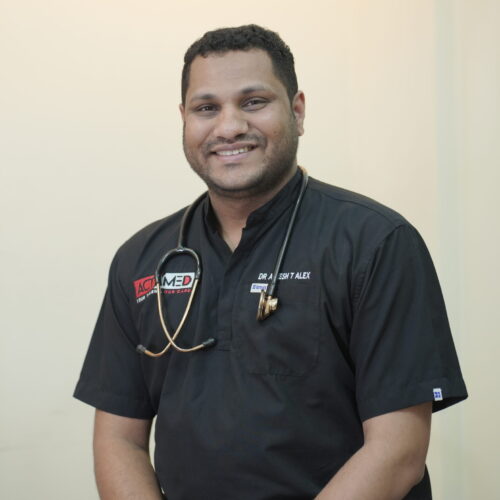
Dr. Ajeesh T Alex

Dr. Ajeesh T Alex

Ayurvedic Orthopaedics & Sports Medicine

Profile