🏃

Sports Injury

Faster, safer return to play with sports medicine and rehab.

Overview

Whether you are a school athlete, a weekend runner or a professional, an injury does not have to end your season. Sports injuries range from sudden events — a twisted ankle, a pulled hamstring, a knee that gives way — to overuse problems that creep up over weeks of training, such as shin pain, tendon pain and bone stress. Getting the diagnosis right early, and rehabilitating properly, decides how quickly you return and whether the injury comes back.

ACTYMED is built around sports medicine. We treat ligament injuries such as ACL injuries and ankle sprains, meniscus tears, muscle injuries such as hamstring, groin and calf strains, tendon problems such as jumper’s knee and Achilles tendinopathy, overuse injuries such as shin splints and stress fractures, shoulder and elbow injuries in throwing and racquet sports, and post-surgical rehabilitation.

At our Sports Injury Clinic, care follows one path: rapid assessment and a clear diagnosis, early management that protects the injury without deconditioning you, progressive rehabilitation with manual therapy, dry needling, taping and Ayurvedic therapies, and a return to sport decided by objective strength and movement testing — not just the pain going away. It is the sports medicine team trusted by 20+ Olympians and national athletes.

Signs & Symptoms

  • Sudden pain during training or competition
  • Swelling or bruising around a joint or muscle
  • A pop, snap or tearing sensation at the moment of injury
  • A joint that feels unstable or gives way
  • Reduced strength, speed or range of movement
  • Pain that builds over weeks of training (overuse)
  • Pain that lingers after training or appears at rest or at night

Causes

  • Sudden trauma — twisting, landing, collisions and tackles
  • Sprains (ligaments) and strains (muscles and tendons)
  • Overuse — too much training load, too soon
  • Inadequate warm-up, fatigue and poor conditioning
  • Technique and equipment problems
  • A previous injury that was never fully rehabilitated
  • Low energy availability and poor recovery, which weaken bone and tissue

Risk Factors

  • A previous injury — the strongest predictor of the next one
  • Sudden spikes in training volume or intensity
  • Pivoting, cutting and landing sports — football, basketball, kabaddi, volleyball
  • Muscle weakness or imbalance, especially in the hamstrings and hips
  • Poor sleep, fatigue and heavy fixture schedules
  • Growth spurts in young athletes
  • Eating too little for the training load

Understanding the Anatomy

Every movement in sport depends on bones, joints, ligaments, muscles and tendons working together. Ligaments hold bones together at joints; muscles produce force; tendons transmit that force to bone; and cartilage and menisci protect the joint surfaces.

Each tissue heals at its own pace: muscle has a rich blood supply and heals in weeks, ligaments and tendons take months to regain full strength, and bone typically needs six to twelve weeks. Rehabilitation has to respect those timelines.

The body works as a chain. A stiff ankle, weak hip or poor landing technique can overload the knee; a weak trunk or shoulder blade can overload the throwing arm. That is why we assess the whole chain, not just the injured spot.

Types & Classification

  • Acute injuries — sprains, strains, tears, dislocations and fractures
  • Overuse injuries — tendinopathy, shin splints, bone stress injuries
  • By tissue — ligament, muscle, tendon, cartilage, bone or nerve
  • By severity — muscle and ligament injuries are graded I (mild) to III (complete tear)
  • Head injuries — concussion, managed with a separate return-to-play protocol

How We Diagnose It

  • A detailed history of the injury mechanism and training load
  • Examination of the injured area and the whole movement chain
  • Ligament stability, muscle strength and joint tests
  • Functional testing — hopping, landing, agility and sport-specific movement
  • Screening for bone stress and low energy availability where relevant
  • Ultrasound, X-ray or MRI when the result will change treatment

If Left Untreated

  • Re-injury from returning too early
  • Chronic instability, especially after ankle and knee injuries
  • Long-standing tendon pain
  • Early joint arthritis after significant joint injuries
  • Loss of fitness, form, selection and confidence

The ACTYMED Advantage

  • A dedicated Sports Injury Clinic trusted by 20+ Olympians and national athletes
  • Rapid assessment and a clear diagnosis before treatment
  • Criteria-based return to play — strength, hop and agility testing, not guesswork
  • Manual therapy, dry needling, taping and cupping alongside progressive rehabilitation
  • Ayurvedic therapies — kizhi, Pizhichil, Marma and Murivenna bandaging — integrated with modern sports medicine
  • Movement assessment and sports nutrition to prevent the next injury

How We Treat It

💳 Inpatient treatment for this condition may be covered by your health insurance. ACTYMED supports both cashless and reimbursement claims, and our team handles the entire documentation for you. Check your eligibility →

Recovery & Prognosis

  • Mild sprains and strains often recover within 1–3 weeks
  • Moderate muscle and ligament injuries usually need 3–8 weeks
  • Bone stress injuries typically need 6–12 weeks
  • ACL reconstruction rehabilitation takes at least 9 months before return to pivoting sport
  • Return is decided by meeting criteria, not by the calendar alone

Prevention Tips

  • Use a structured warm-up such as FIFA 11+ before training and matches
  • Include Nordic hamstring exercises in your routine
  • Increase training load gradually — avoid sudden spikes
  • Build strength in the hips, trunk and legs
  • Fully complete rehabilitation after any injury
  • Sleep well and eat enough for your training load

Home Care & Self-Management

Do's

  • Protect, elevate and compress a fresh injury for the first 1–3 days
  • Keep the rest of your body moving and training
  • Start guided loading as early as the injury allows
  • Complete every stage of your rehabilitation
  • Get any head injury assessed before returning to play

Don'ts

  • Don't play through a pop with immediate swelling
  • Don't return to sport just because the pain has gone
  • Don't train through pain that worsens over weeks — it may be a bone stress injury
  • Don't rely on painkillers to get through matches
  • Never return to play on the same day after a suspected concussion

Frequently Asked Questions

What should I do in the first 48 hours after an injury?

Protect the injured area and avoid activities that clearly worsen it for the first one to three days, raise it when you can, and use a compression bandage for swelling. Keep the rest of your body moving. After that, gradual, comfortable loading speeds healing far more than prolonged rest. Get prompt assessment if you cannot bear weight, the joint looks deformed, or swelling appeared rapidly within a couple of hours.

Should I use ice or heat?

Ice can ease pain in the first day or two after an injury, used for 10–20 minutes at a time. It does not speed healing, so do not rely on it. Heat is more useful later for stiffness and muscle tightness. Neither replaces early, guided movement.

Do I need an MRI?

Not always. Many sports injuries are diagnosed accurately with a careful examination. We request an MRI or ultrasound when it will change treatment — for example a suspected complete ligament or tendon tear, a meniscus tear with locking, a bone stress injury, or an injury that is not recovering as expected — and we explain the results in plain language.

How soon can I return to sport?

It depends on the injury, but return should be based on meeting criteria — strength, range of motion, hop and agility tests, and sport-specific drills — not on a date or the absence of pain. Athletes who return before meeting these criteria are far more likely to be injured again. We set clear milestones so you always know what the next step is.

Can I keep training while injured?

Usually, yes — in a modified way. We keep you training around the injury: cross-training, strength work for the uninjured areas, and gradually reintroducing sport-specific load. Staying fit makes the return faster and safer.

How do I know if an injury is serious?

Warning signs include hearing or feeling a pop with immediate swelling, a joint giving way, being unable to bear weight, a locked knee, numbness or weakness, and pain at night or at rest. These need prompt assessment. Pain that is steadily worsening during training over weeks can signal a bone stress injury and should not be trained through.

How are sports injuries treated at ACTYMED?

After assessment, your plan may combine progressive rehabilitation and return-to-play training, manual therapy, dry needling, kinesiology taping, cupping, and Ayurvedic therapies such as Elakizhi, Podikizhi, Pizhichil, Marma Kizhi and Murivenna bandaging — with athlete movement assessment and sports nutrition to support recovery and prevent the next injury.

Can sports injuries be prevented?

Many can. Structured warm-up programmes such as FIFA 11+ reduce injuries in team sports, Nordic hamstring exercises roughly halve hamstring injuries, and increasing training loads gradually avoids the spikes that cause many overuse injuries. Fully completing rehabilitation after one injury is the best protection against the next.

When does a sports injury need surgery?

A minority do: complete ligament ruptures in unstable joints (some ACL injuries in pivoting athletes), displaced fractures, full tendon ruptures, and locked knees from displaced meniscus tears. Most sports injuries — including many complete tears — rehabilitate successfully without an operation. Our role is precise diagnosis, honest counsel about which category yours falls in, and prompt surgical referral when it genuinely helps.

When is a sports injury an emergency?

Call for emergency help for any head injury with loss of consciousness, confusion, vomiting or worsening headache — and never return to play the same day after a suspected concussion. Also emergencies: a suspected neck or spine injury (do not move the athlete), an obvious fracture or dislocation, collapse or confusion in the heat (possible heat stroke — cool the athlete immediately), chest pain or collapse during exercise, and severe, escalating pain in a swollen, tight calf or forearm after an injury.

What the Evidence Says

  • The PEACE and LOVE framework (Dubois and Esculier, BJSM 2020) favours early protection followed by progressive loading over prolonged rest and ice
  • Structured neuromuscular warm-ups such as FIFA 11+ reduce football injuries by around a quarter to a third (Thorborg et al., BJSM 2017)
  • Nordic hamstring exercise roughly halves the rate of hamstring injuries (van Dyk et al., BJSM 2019)
  • After ACL reconstruction, athletes who pass return-to-sport criteria have far fewer knee re-injuries than those who do not (Grindem et al., and Kyritsis et al., BJSM 2016)

Specialists Who Can Help

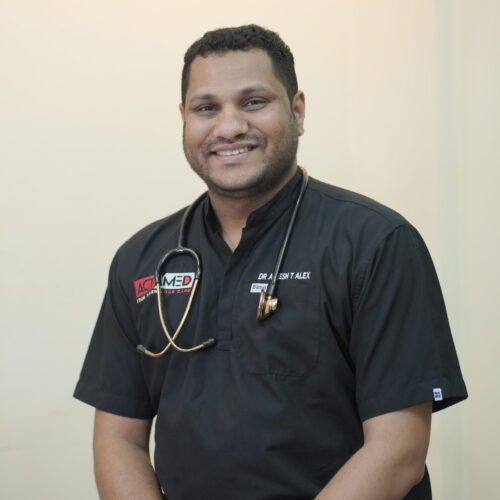
Dr. Ajeesh T Alex

Dr. Ajeesh T Alex

Ayurvedic Orthopaedics & Sports Medicine

Profile

From Our Knowledge Centre