🏃

Pes Anserine Bursitis (Inner Knee Pain)

Pain on the inner shin just below the knee - a common, very treatable overuse problem, often alongside knee arthritis.

Overview

Pes anserine bursitis is a common cause of inner-knee pain, felt on the inner shin a few centimetres below the knee joint – not on the joint line itself. It is named for the goose-foot arrangement of three tendons that attach there over a small bursa, and it flares from overuse, tight hamstrings, altered mechanics, or being overweight. Classic clues are pain going up and down stairs and rising from a chair.

Two honest points shape good care. First, it is a distinct, very treatable overuse problem – not simply “knee arthritis” – so pinpointing it matters, because it responds well to loading, stretching and mechanics work. Second, it very commonly coexists with knee osteoarthritis, especially in older adults, so the best results come from treating both together rather than the bursa in isolation. ACTYMED localises the pain accurately, treats the tendon-bursa problem, and manages the wider knee – conservatively, as this rarely needs anything invasive.

Signs & Symptoms

  • Pain and tenderness on the inner side of the knee, a few centimetres below the joint line
  • Worse climbing or descending stairs
  • Pain rising from a chair or getting out of a car
  • Night pain, sometimes with the knees touching in bed
  • Aching after activity such as running or long walking
  • Sometimes mild local swelling over the inner shin

Causes

  • Overuse of the tendons attaching at the inner shin (sartorius, gracilis, semitendinosus) over their bursa
  • Tight hamstrings pulling on the attachment
  • Overpronation and altered knee mechanics
  • Being overweight, which loads the inner knee
  • Coexisting knee osteoarthritis (very commonly associated)
  • A sudden increase in running or walking load

Risk Factors

  • Middle-aged and older women, especially with overweight
  • Knee osteoarthritis (frequently coexists)
  • Diabetes
  • Runners and athletes with training-load spikes
  • Tight hamstrings and overpronation
  • Activities with repeated stair-climbing or squatting

Understanding the Anatomy

On the inner shin, a few centimetres below the knee, three tendons (sartorius, gracilis and semitendinosus) join in a shape said to resemble a goose foot - pes anserine - and glide over a small bursa where they attach to the bone.

Overuse, tight hamstrings, altered mechanics or associated knee arthritis can inflame this bursa and tendon attachment, producing focal pain at that inner-shin spot - distinct from the knee joint line above it.

Because it so often accompanies knee osteoarthritis and mechanical overload, good treatment addresses both the local tendon-bursa problem and the wider knee mechanics, rather than the bursa in isolation.

Types & Classification

  • Isolated pes anserine bursitis/tendinopathy - from overuse or mechanics
  • Associated with knee osteoarthritis - a very common combination in older adults
  • Associated with tight hamstrings and overpronation
  • Acute versus chronic
  • Distinguish from: medial meniscus problems, medial collateral ligament issues, and pain referred from the knee joint itself

How We Diagnose It

  • Focal tenderness at the classic spot - the inner shin a few centimetres below the joint line - is the key sign
  • Distinguishing it from the knee joint line and medial structures above
  • Assessing hamstring tightness, overpronation and knee mechanics
  • Screening for coexisting knee osteoarthritis, which commonly accompanies it
  • Imaging is usually unnecessary; it is largely a clinical diagnosis

If Left Untreated

  • Persistent inner-knee pain limiting stairs and daily activity when the cause is not addressed
  • Ongoing pain when a coexisting knee arthritis is missed or untreated
  • Altered gait and compensation
  • Recurrence if mechanics, load and hamstring tightness are not corrected

The ACTYMED Advantage

  • Accurate localisation - we identify the inner-shin bursa-tendon source and separate it from the knee joint and medial structures
  • Loading-based rehabilitation and hamstring flexibility work to settle the tendon attachment
  • Addressing the whole picture - overpronation, knee mechanics, weight and any coexisting knee arthritis
  • Dry needling, soft-tissue therapy and offloading for symptom relief
  • A corticosteroid injection for selected stubborn cases
  • Honest management of associated knee osteoarthritis rather than treating the bursa alone
  • Conservative-first throughout - this rarely needs anything invasive

How We Treat It

💳 Inpatient treatment for this condition may be covered by your health insurance. ACTYMED supports both cashless and reimbursement claims, and our team handles the entire documentation for you. Check your eligibility →

Recovery & Prognosis

  • Most cases settle over several weeks to a few months with loading, stretching, offloading and mechanics correction
  • Response is best when a coexisting knee arthritis is also managed
  • A corticosteroid injection can help stubborn cases
  • Recurrence falls when hamstring tightness, mechanics and load are corrected
  • It rarely needs anything beyond conservative care

Prevention Tips

  • Keep hamstrings flexible and the knee and hip muscles strong
  • Increase running and walking loads gradually
  • Support overpronation with appropriate footwear
  • Manage body weight to reduce inner-knee load
  • Manage any coexisting knee arthritis well
  • Address early inner-knee twinges before they become chronic

Home Care & Self-Management

Do's

  • Do the hamstring stretching and strengthening programme
  • Support overpronating feet and correct knee mechanics
  • Modify stair, squat and running load while it settles
  • Manage weight and any coexisting knee arthritis
  • Use ice and offloading for comfort during flares

Don'ts

  • Do not assume all inner-knee pain is arthritis - this bursa is a treatable, separate source
  • Do not ignore tight hamstrings and poor mechanics - they drive recurrence
  • Do not push through stair pain without addressing the cause
  • Do not rely on rest alone - the tendon attachment needs graded loading
  • Do not overlook coexisting knee osteoarthritis

Frequently Asked Questions

How do I know it is this and not knee arthritis?

Location is the key. Pes anserine pain is felt at a specific spot on the inner shin, a few centimetres below the knee joint, and is tender to press there. Knee arthritis pain is usually deeper and on the joint line above. Importantly, the two often occur together – so it is not always either/or, and part of good care is recognising when both are present and treating each appropriately.

What makes it better?

A combination that addresses both the local problem and the mechanics behind it: hamstring stretching, strengthening of the knee and hip muscles, correcting overpronation, offloading and load modification, and managing weight and any coexisting arthritis. Most cases settle over several weeks to a few months with this approach. Ice and soft-tissue therapy help symptoms along the way.

Why does it hurt most on stairs and getting up?

Because those movements load the inner-knee tendon attachment where the problem sits – stairs and rising from a chair demand work from exactly these muscles. That pattern is characteristic and helps confirm the diagnosis. As the tendon attachment settles with loading and the mechanics improve, those specific activities become comfortable again.

Do I need a scan?

Usually not. Pes anserine bursitis is largely a clinical diagnosis based on the characteristic focal tenderness at that inner-shin spot. We image only if the picture is unclear or we need to assess a coexisting knee problem. Avoiding unnecessary scans is part of sensible care.

Is surgery ever needed?

Essentially never. Pes anserine bursitis is a conservatively-treated condition – loading, stretching, mechanics correction, offloading, and sometimes an injection for stubborn cases. Surgery is not part of standard management. If pain persists, the usual reason is an unaddressed mechanical factor or a coexisting knee arthritis that needs attention, not a need to operate on the bursa.

What the Evidence Says

  • Pes anserine bursitis/tendinopathy is a common, often under-recognised cause of medial knee pain, frequently coexisting with knee osteoarthritis (Helfenstein and Kuromoto)
  • Conservative management - activity modification, hamstring stretching, strengthening, offloading and treating associated osteoarthritis - is effective first-line
  • Corticosteroid injection can help refractory cases
  • It is a clinical diagnosis based on the characteristic focal tenderness, rarely needing imaging

Specialists Who Can Help

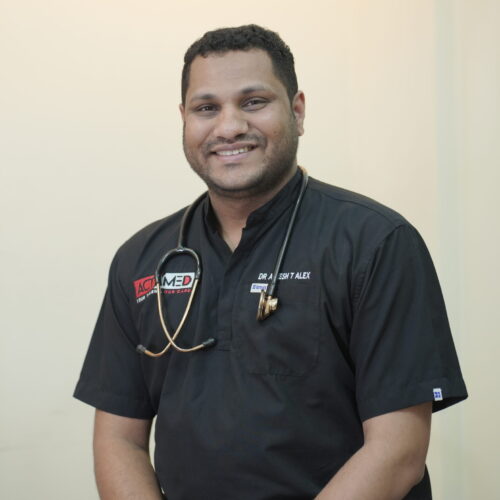
Dr. Ajeesh T Alex

Dr. Ajeesh T Alex

Ayurvedic Orthopaedics & Sports Medicine

Profile

From Our Knowledge Centre