+91 94965 02248 contact@actymed.in Thodupuzha: Open 24/7
Book
🦵

Calf Strain

Sudden mid-calf stab or a runner's tightening ache — graded 1-12+ week recovery, DVT and Achilles screening built in.

Overview

Calf strains are tears of the muscles at the back of the lower leg — most often the inner head of the gastrocnemius (the classic “tennis leg”: a sudden mid-calf stab lunging forward), or the deeper soleus, the endurance workhorse that fails more gradually in runners. Calf injuries make up roughly 13% of muscle injuries in elite football and are famously an injury of the athlete’s thirties and forties — age and previous calf injury are the two strongest risk factors in the research.

Two safety notes sit at the front of every calf assessment, and they’re non-negotiable. Calf pain or swelling without a clear injury moment can be a deep vein thrombosis (DVT) — a blood clot needing urgent medical care, not massage (which is dangerous with a clot). And a sudden “kicked in the back of the leg” feeling with weak push-off can be an Achilles tendon rupture, which we screen for with specific testing. Both mimics are checked before any calf strain is treated as one.

Signs & Symptoms

  • Sudden sharp pain in the mid or inner calf, often lunging or push-off (gastrocnemius)
  • Gradual tightening calf ache building over runs (soleus)
  • Tenderness, sometimes swelling or bruising tracking to the ankle
  • Pain rising onto tiptoes or pushing off
  • Limping in the first days
  • Red flags needing urgent checks: swelling/warmth WITHOUT injury (DVT), sudden snap with weak push-off (Achilles rupture)

Causes

  • Explosive push-off or lunge loading the gastrocnemius at stretch
  • Running volume or hill/speed spikes overloading the soleus
  • Fatigue late in matches and long runs
  • Insufficient calf strength-endurance for the sport's demands
  • Previous calf injury with incomplete capacity rebuild
  • Dehydration and cold conditions as contributors

Risk Factors

  • Age — risk rises through the 30s and 40s (the classic 'older athlete' muscle injury)
  • Previous calf strain — the other dominant risk factor in systematic review
  • High running loads or sudden spikes
  • Racquet sports and football (lunge and push-off demands)
  • Low single-leg heel-raise capacity
  • Previous lower-limb injuries changing load

Understanding the Anatomy

The calf's engine has two layers: the gastrocnemius — two heads crossing both knee and ankle, built for explosive push-off — and beneath it the soleus, crossing only the ankle, a fatigue-resistant workhorse that absorbs enormous repetitive load in running (several times body weight per stride).

Both share the Achilles tendon as their anchor to the heel — why calf and Achilles problems interweave and why rupture screening belongs in calf assessment.

The medial (inner) gastrocnemius head is the classic 'tennis leg' site; soleus strains hide deeper and lower, need bent-knee testing to find, and are the ones most often under-diagnosed and under-respected.

Types & Classification

  • Gastrocnemius strain — sudden, at speed or lunge; graded 1-3
  • Soleus strain — gradual, running-related; notoriously slower than it feels
  • Grade 1: small fibre disruption (1-3 weeks)
  • Grade 2: partial tear with strength loss (3-6 weeks)
  • Grade 3: severe/complete tear (8-12+ weeks)
  • Mimics classified out: DVT, Achilles rupture, referred pain from the back

How We Diagnose It

  • Mechanism story — sudden lunge vs building run ache vs no injury at all (red flag)
  • DVT screening — swelling, warmth, risk factors; urgent referral if suspected
  • Achilles integrity testing (calf squeeze/Thompson test)
  • Palpation localising gastrocnemius vs soleus
  • Strength-endurance testing: single-leg heel raises, straight- and bent-knee
  • Ultrasound/MRI for major tears or unclear cases

If Left Untreated

  • Recurrent strains from returning before capacity is rebuilt — the calf's signature complication
  • A 'mild' soleus strain becoming a months-long grumbling injury when trained through
  • Achilles overload following calf weakness
  • Missed DVT if calf pain is massaged instead of screened — potentially dangerous
  • Long-term push-off power loss changing running mechanics

The ACTYMED Advantage

  • Safety first, every time: DVT and Achilles-rupture screening before any calf pain is treated as a strain
  • Gastrocnemius-vs-soleus diagnosis — because the two need different loading, and generic calf rehab fails the soleus
  • Counted capacity testing (single-leg heel raises, both knee positions) — return decisions in numbers
  • Early-loading protocol consistent with the NEJM muscle-strain evidence
  • Graded walk-jog-run-speed return built for your sport
  • Dry needling and late-phase warm bolus therapy for the stiffness that follows healing muscle

How We Treat It

Recovery & Prognosis

  • Grade 1: typically 1-3 weeks with structured loading
  • Grade 2: typically 3-6 weeks; running rebuilds in the final phase
  • Grade 3: 8-12+ weeks, staged return
  • Soleus caution: often 1-2 weeks longer than the equivalent-feeling gastrocnemius injury — plan for it rather than fight it
  • Cycling and gym work usually continue almost immediately; running returns via capacity markers, speed and hills last

Prevention Tips

  • Build single-leg calf capacity — both straight-knee and bent-knee heel raises, with reps to spare over your sport's demands
  • Progress running volume, hills and speed gradually
  • Warm up progressively before explosive court sports
  • Respect age: calf work becomes non-negotiable training from the mid-30s
  • Rebuild fully after any calf episode — previous injury is the top risk factor
  • Stay hydrated for long sessions in heat

Home Care & Self-Management

Do's

  • Protect for ~48 hours, then start guided loading early
  • Train around it — bike and upper body from day one
  • Do both bent-knee and straight-knee calf work as prescribed
  • Pass the heel-raise capacity test before running
  • Rebuild running before rebuilding speed

Don'ts

  • Never massage a swollen calf that had no injury moment — DVT must be excluded first
  • Don't 'test it' with runs every few days — that's how 2 weeks becomes 8
  • Avoid aggressive stretching in the first week
  • Don't skip bent-knee (soleus) work because straight-knee raises feel fine
  • Don't rush back to court sports without lunge and push-off testing

Frequently Asked Questions

How long does a calf strain take to heal?

By grade, honestly: grade 1: typically 1–3 weeks. Grade 2: 3–6 weeks. Grade 3: 8–12 weeks or longer. One extra truth from clinical experience and the literature: soleus strains often run slower and grumble longer than their initial pain suggests — under-respecting a “mild” soleus strain is the classic path to a three-month problem.

What’s the difference between a gastrocnemius and a soleus strain?

The gastrocnemius (upper calf, crosses the knee) fails suddenly at speed or lunge — sharp, memorable, often “tennis leg”. The soleus (deeper, below) is a fatigue-resistant postural muscle that strains with running volume — a tightening ache that builds over runs. They’re loaded differently in rehab: gastrocnemius with straight-knee work, soleus with bent-knee work — a distinction generic “calf raises” miss.

Could my calf pain be something dangerous?

Two possibilities we always exclude: DVT — suspect it with calf pain, swelling, warmth or tightness without an injury moment, especially after travel, surgery or immobility; it needs urgent medical assessment, never massage. And Achilles rupture — a sudden blow-like snap with weak push-off; we test for it specifically. Screening for both is built into the first visit.

Why do calf strains keep recurring?

The research points at two factors above all: age and a previous calf injury (a systematic review found these the dominant risks). Practically, recurrence follows returning before single-leg calf capacity is rebuilt — the calf endures thousands of loaded contractions per run, so it needs endurance-grade recovery, verified by testing, not just pain-free walking.

How soon should rehab start?

Early — after roughly 48 hours of protection, progressive loading begins. The same NEJM evidence that guides our hamstring care (early rehab start shortening recovery by weeks versus delayed) applies to calf muscle strains.

When can I run again?

When you pass the markers: single-leg heel-raise capacity approaching the other side (we count reps to fatigue, both bent- and straight-knee), pain-free brisk walking, then a graded walk-jog build. Running returns in stages — easy volume first, speed and hills last.

Can I train through a mild calf strain?

Modify, don’t push: cycling and upper-body work usually continue immediately; running waits for the capacity markers. “Testing it” with runs every few days is the most reliable way to stretch a 2-week injury into an 8-week one.

What does ACTYMED’s calf programme include?

Safety screening (DVT, Achilles), gastrocnemius-vs-soleus diagnosis, early isometric and progressive heel-raise loading in both knee positions, dry needling for the guarding, capacity testing against your other leg, then a walk-jog-run-speed build — with warm Ayurvedic bolus therapy (Elakizhi) where post-strain stiffness dominates in the later phase.
What the Evidence Says

  • Green & Pizzari (BJSM 2017) systematic review: age and previous calf injury are the dominant calf-strain risk factors
  • Ekstrand et al. (AJSM 2011): calf injuries ≈13% of muscle injuries in elite football
  • Early loading after acute muscle strain shortens recovery versus delayed rehab (Bayer et al., NEJM 2017)
  • PEACE & LOVE framework (Dubois & Esculier, BJSM 2020) guides acute management
  • Heel-raise capacity testing is the accepted functional benchmark for calf rehabilitation

Specialists Who Can Help

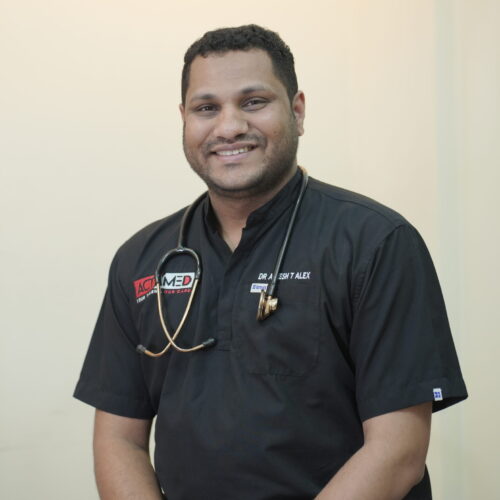
Dr. Ajeesh T Alex

Dr. Ajeesh T Alex

Ayurvedic Orthopaedics & Sports Medicine

Profile