Sports rehabilitation is the structured journey from injury back to full performance — not just “until it stops hurting.” The difference matters enormously: research shows athletes who return before meeting objective criteria re-injure at far higher rates, while criteria-based return-to-sport substantially reduces that risk.
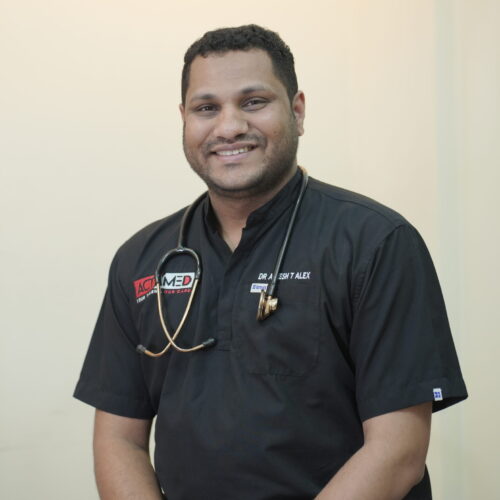
ACTYMED’s programme reflects Dr. Ajeesh’s career with elite athletes — more than 20 Olympians and 5,000+ competitive athletes. Rehabilitation is staged: settle the injury, restore full movement, rebuild strength symmetrically (tested, not guessed), reintroduce running/jumping/sport-specific loading, then pass return-to-play testing before clearance. Nutrition, sleep and training-load management run alongside, because tissue heals on the whole athlete’s physiology, not just on exercises.
Frequently Asked Questions
When can I get back to my sport?
When you pass the criteria, not when a calendar date arrives. Typical frames: muscle strains 2–8 weeks, ankle sprains 2–12 weeks, ACL reconstruction 9+ months — but within those ranges, your testing results decide. Research on ACL injuries (Grindem et al., British Journal of Sports Medicine, 2016) shows meeting discharge criteria and avoiding premature return dramatically reduces re-injury.
What does return-to-play testing involve?
Strength testing against your uninjured side and sport norms, hop and agility test batteries, sport-specific movement quality under fatigue, and psychological readiness — fear of re-injury is a real, measurable risk factor.
Can I keep training while injured?
Almost always — that is a core principle. We modify around the injury (bike for a runner’s foot injury, upper-body loading during ankle rehab) so fitness, habit and mood are protected while the injured tissue progresses through its own pathway.
Do you work with my coach?
Gladly. Return-to-play succeeds best as a triangle — athlete, clinician, coach — sharing the same load plan and milestones. We provide coaches concrete guidelines at every stage.
What about re-injury prevention after I return?
The final phase builds your ongoing programme: maintenance strength work, load monitoring habits and early-warning signs, because the biggest risk factor for the next injury is the last one — managed well, that risk drops sharply.